Streamlining repair workflows
Freed up mechanics to repair more bikes by streamlining the end-to-end repair workflow into a single app.
Context
Time wasted on mechanic admin, digital tools not fit for purpose.
Business goal: improve operational efficiency & increase bike availability.
2.5hrs ↓
Saved per week
1 - not 4
Apps needed
Priorities
- E2E workflow in a single app + automations
- On-street mechanics first (mobile-first)
Tradeoffs
- Distinct branding from B2C App
- Full autonomy over UI (constrained legacy framework)
- Calls with non-lead mechanics
Product
B2B Mechanic App (Android)
Duration
Discovery 1 month
Design & Delivery 2 months
My role
Led discovery, E2E design, and rapid prototyping with engineer
Team
1 Product Designer · 1.5 Full-stack Dev · 1 Ops Lead · 1 PM
Problem
Inefficient workflows delayed bike repairs
Inefficient repair workflows impacted bike availability:
- 30 mins extra admin at the end of each day
- 4 + apps needed to complete a repair job
Process
I streamlined the end-to-end workflow, automating repetitive tasks
Paired with a developer to rapidly prototype, live test and iterate over 6 one-week sprints.
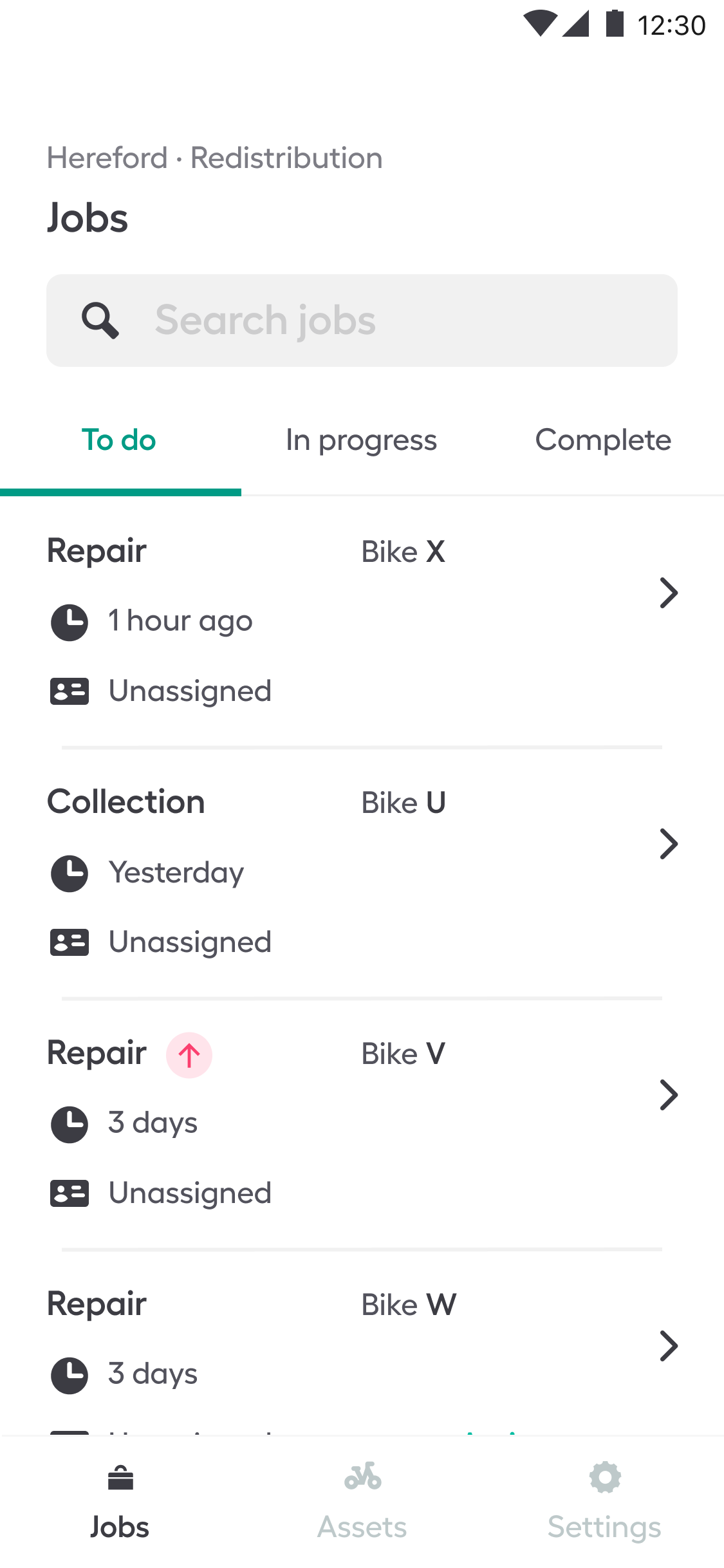
Integrated the E2E journey into a single app. Assumed mechanics would work through jobs in an ordered list.
List view was unintuitive, as jobs are chosen based on proximity to their location, or whichever bike they are with.
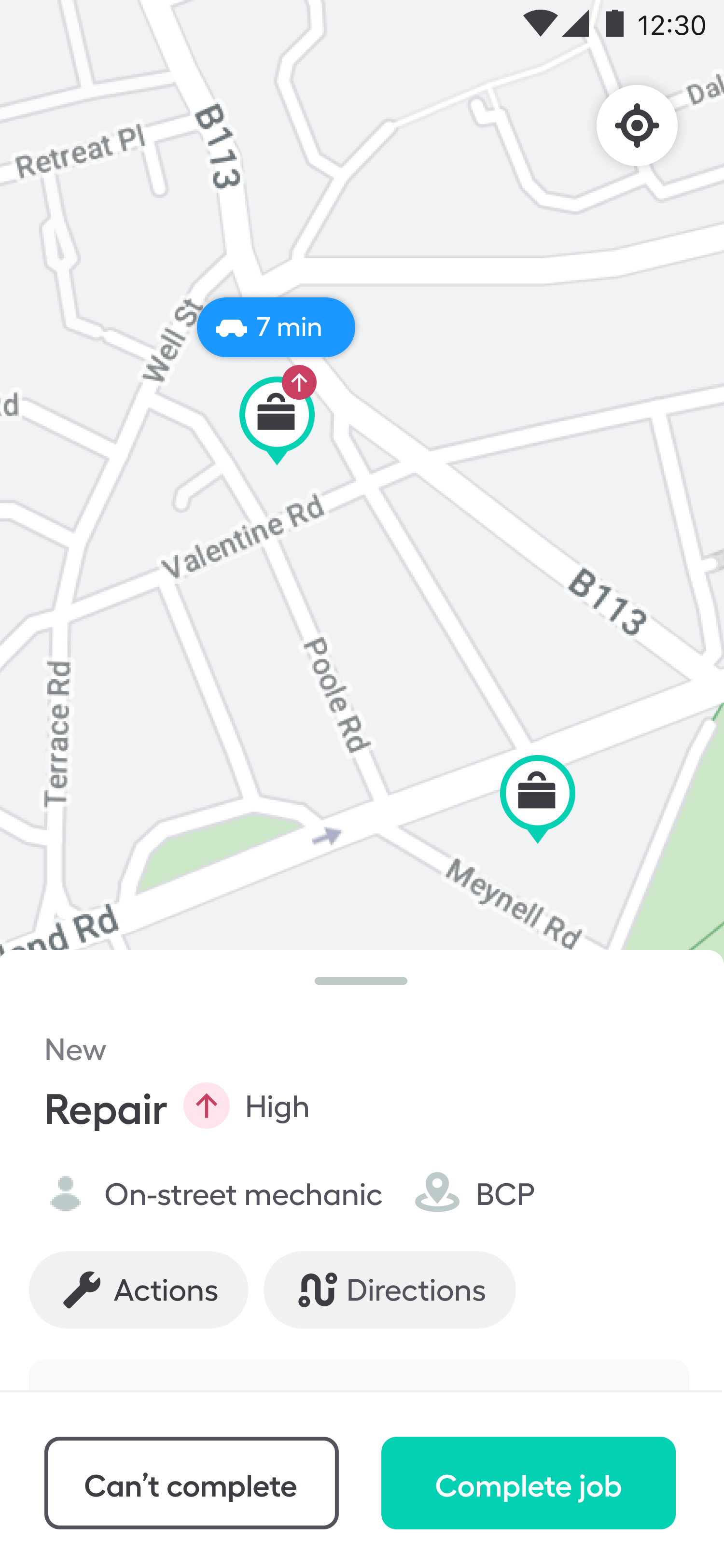
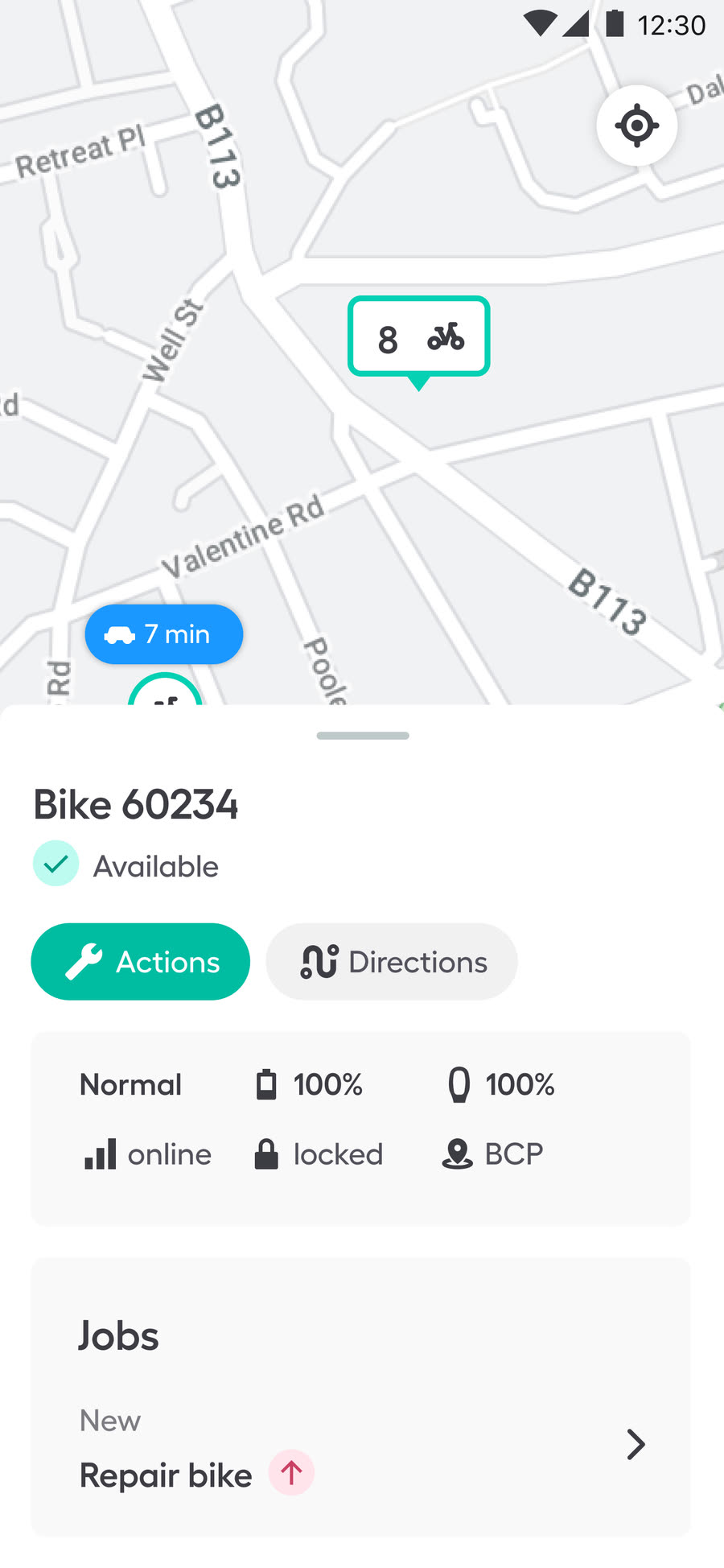
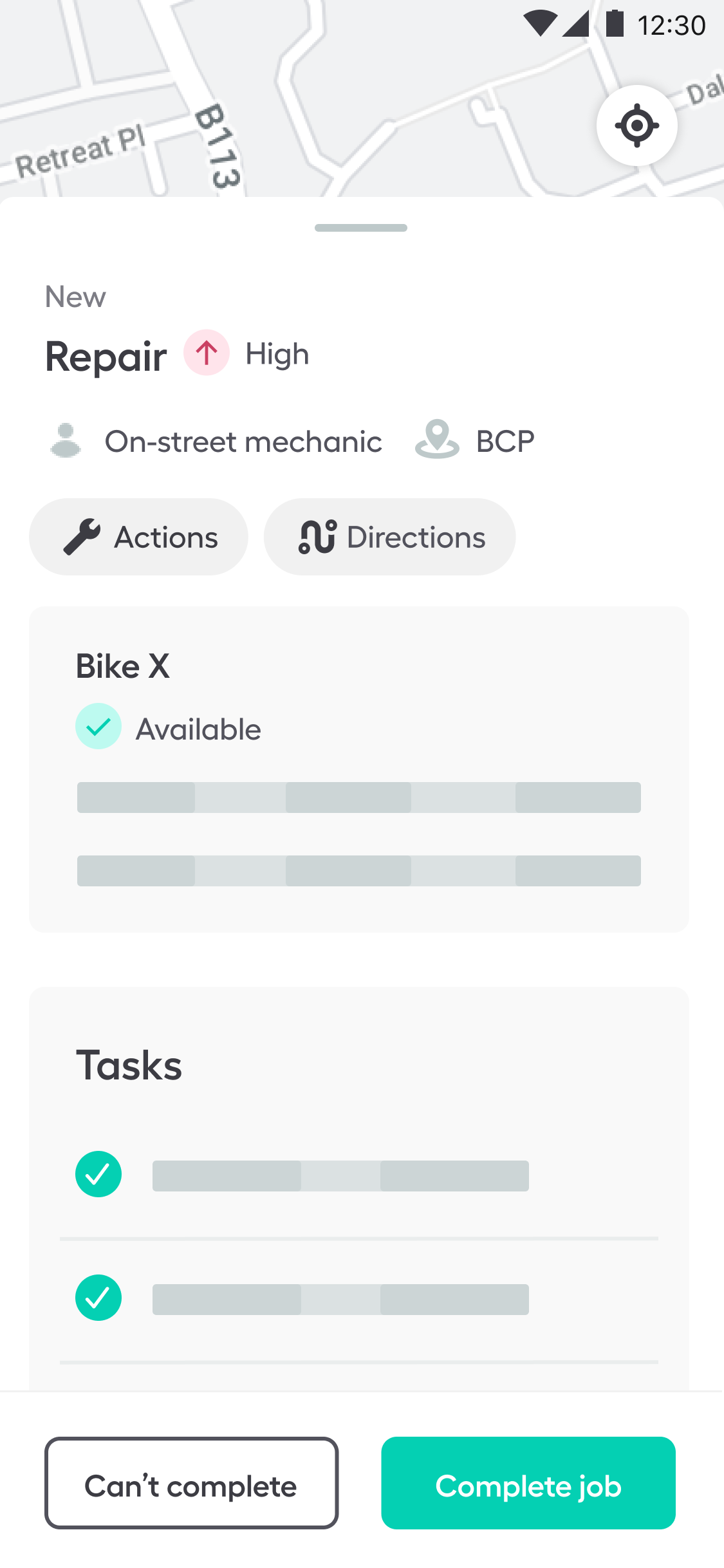
Redesigned the app to enable users to access their jobs from 2 entry points:
- find nearest job on map
- scan/search a bike
The legacy mobile framework restricted my choice of UI components during rapid prototyping. We shipped quickly, then updated the UI post-release.
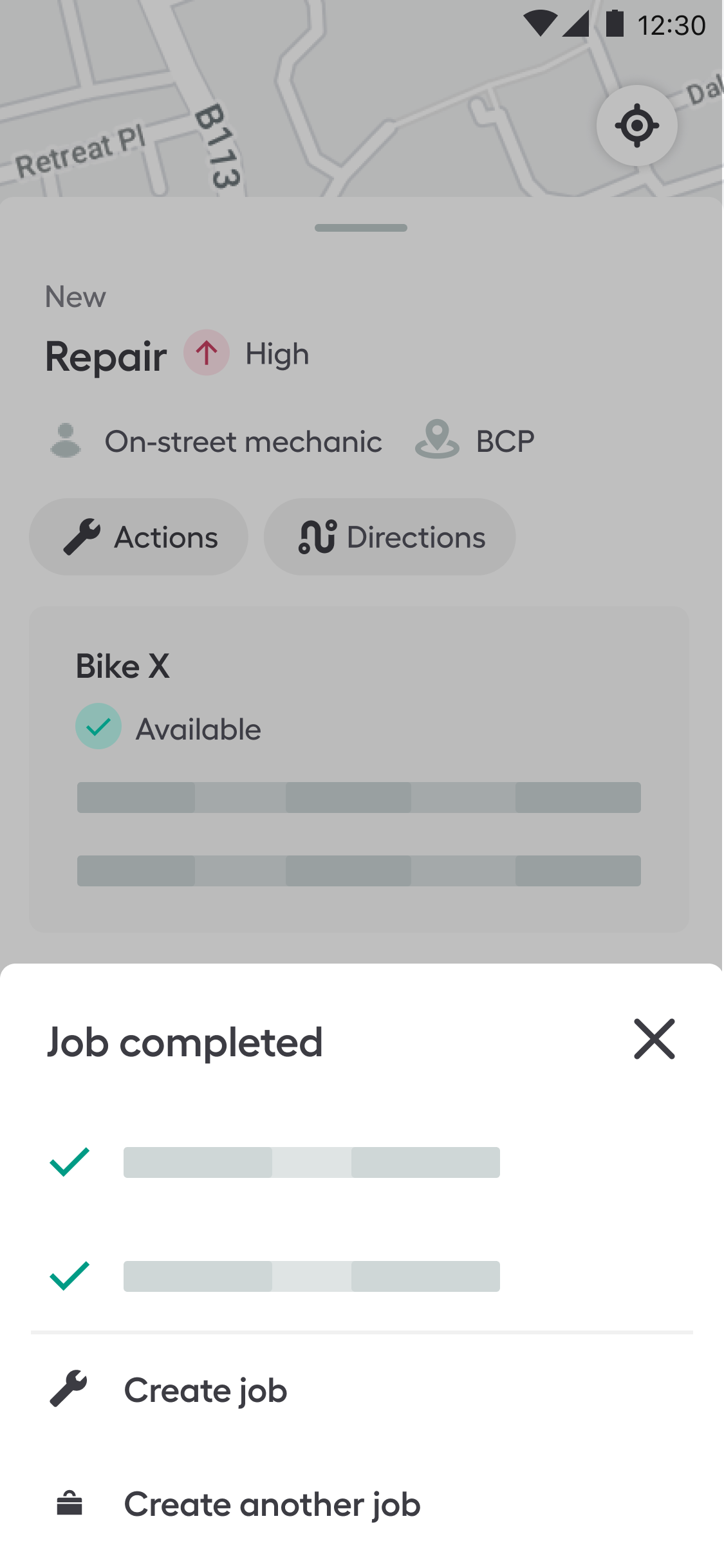
Automated follow-on tasks to reduce repetitive work.
Observed that follow-on tasks may be required, but it's easy to forget.
Automated follow-on tasks, reducing repetitive work. Co-designed flows with mechanics and a developer.
Collaborated with the developer to design feedback indicators to reassure users and handle edge cases - notifications, errors, and empty states.
Results
We cut admin time, freeing up mechanics to repair more bikes
Delivered a more reliable service - more bikes were available on-street ready to ride.
Within 1 month, all mechanics were using the app across the 5 cities we operated in.
Control centre has a more trustworthy and up-to-date view of the scheme health, making for more efficient operation.

Reflections
Pairing with a developer early let me push technical boundaries and deliver fast
I reframed user insights as business risks to overcome stakeholder pushback
I prioritised rapid live testing over pixel-perfect UI, and refined post-launch
I observed day-to-day workflows on-site to reveal unmet user needs
Given more time, I would have explored handling inaccurate bike locations in more depth, to reduce wasted search time
I would also develop distinct branding to differentiate from the B2C rider app